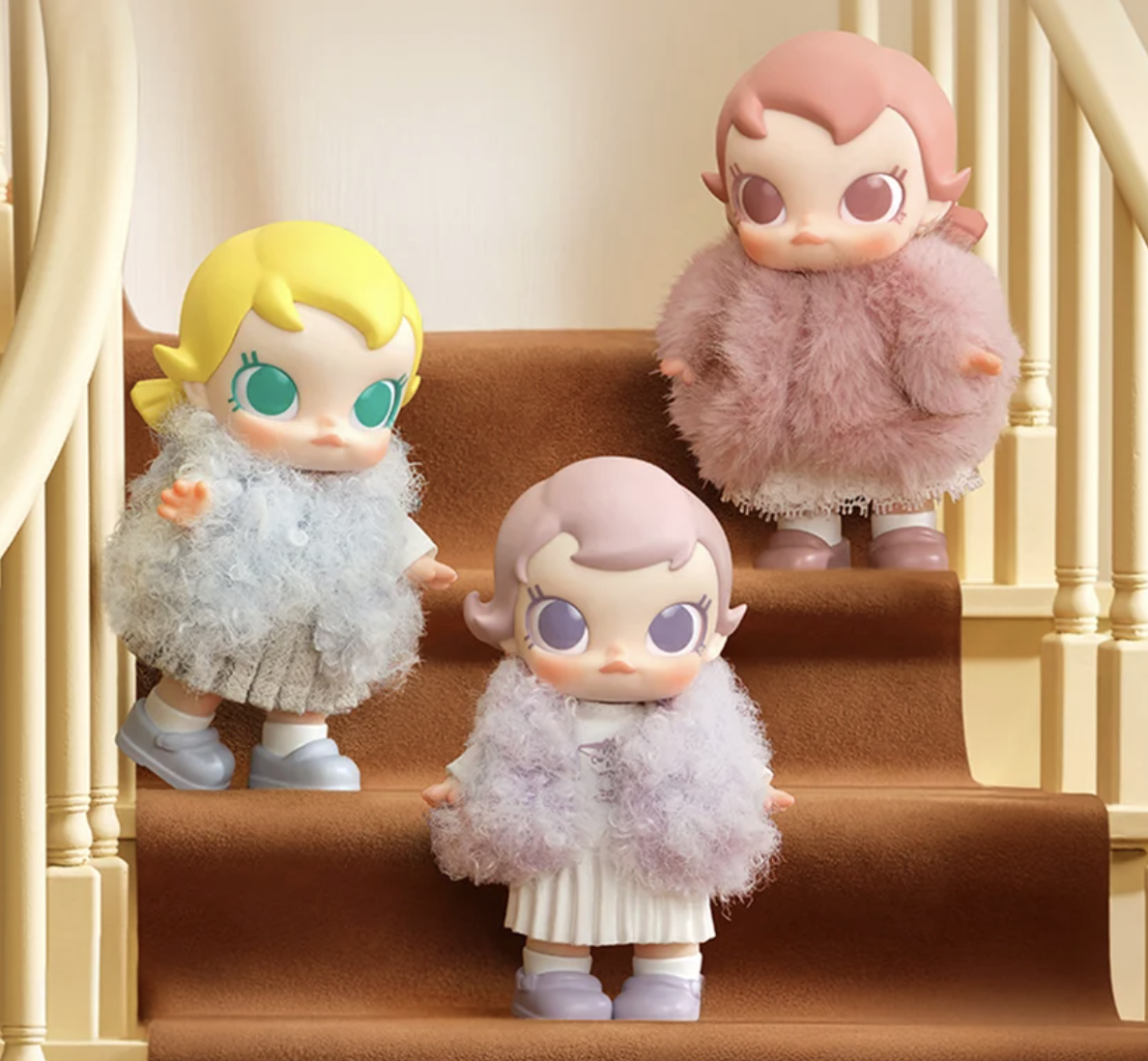
A blind box is a small sealed box that contains a collectible figure. You don't know which figure is inside until you open it.
That's the whole concept. The mystery is the point.
How they work
Most blind-box series contain somewhere between 6 and 12 different figures from the same designed family — a set of characters in different poses, or the same character in different colourways. You buy a box, you open it, you get one. If you want the full set, you keep buying — and trade or sell the duplicates you don't want.
The figures themselves are usually 7-12cm tall, made from PVC or vinyl, and feel a bit like a high-end vinyl toy. They sit on a shelf or a desk. Some people line them up by colour; others by character; others arrange little scenes. There's no wrong way to do it.
A typical box costs around £12-15 in the UK. A case — the full cardboard tray of 12 — usually costs £130-165 and gives you the regular set with one or two duplicates.
Where it came from
The format is older than it feels. Japanese gachapon capsule toys (the ones from coin-operated machines outside arcades) have worked the same way since the 1960s. The current wave is mostly Chinese — Pop Mart, founded in 2010, popularised the modern designer-toy blind box internationally. Pop Mart's characters — Molly, Skullpanda, Labubu, Dimoo, Hirono — are now sold in dozens of countries and feature heavily on Western social media.
Other brands worth knowing: Sonny Angel (Japanese, smaller naked-baby figures with hats), Miniso (Chinese retail chain with Disney and other licensed sets), Smiski (Japanese little green figures), and a growing crop of independent artists doing their own series.
What's so appealing about it
A few things, depending on who you ask.
The design. Most blind-box figures are made by genuinely good artists. The sculpts are detailed, the paint applications are precise, and the characters have a coherent visual identity that holds up next to "proper" art toys. People collect them the same way they'd collect ceramics or prints — for how they look.
The dopamine. There's a small jolt of suspense each time you open one. Some people enjoy that. Some people find it stressful. Both reactions are normal.
The sociability. Trading duplicates with friends, joining online communities, sharing pulls — collecting becomes a thing you do with people rather than at them.
The accessibility. £12-15 is a low entry price compared to most things you'd display in your home. You can start with one box. You can stop whenever you want. There's no "starter kit" gate.
What about secret figures?
Most series include one or more secret figures (sometimes called chase figures). These are rarer than the regulars — pulling one is usually around a 1-in-72 to 1-in-144 chance per box, depending on the series. They're visually distinct: a different paint job, a different pose, sometimes a different material entirely. They're worth more on the secondary market, often substantially more.
If you keep collecting, you'll learn each brand's tiering language: secret, super secret, mega, chase. The exact words mean slightly different things at different brands, but they all describe scarcity. Worth knowing that not all "secrets" are equally rare — some are 1-in-12, some are 1-in-720.
A few honest caveats
It's a paid form of randomness. There's a reason some people compare blind boxes to scratch cards. If you find yourself buying boxes mostly hoping for the rare one rather than enjoying the regulars, it's worth pausing and thinking about whether this hobby is meeting you well. The healthiest way to collect is to buy figures you love regardless of rarity.
Storage adds up. A small collection lives on a shelf; a serious collection eats furniture. Many collectors end up doing surprising things with display cabinets.
Counterfeits exist. Once a character is popular enough, fakes appear on Amazon, Vinted, and questionable resale shops. Buying from official retailers solves this; buying from the secondary market means learning the tells. There's a separate guide on Shelfd for that.
How to start
Pick one character you actually like the look of, search up the series it's from, and buy a single box. Don't commit to a case until you've held one and decided you want more. Most people start with Pop Mart because it's the most accessible — Pop Mart UK ships from the UK and has the most reliable supply.
Once you've got two or three, you'll know whether the hobby has clicked for you. And if it has, Shelfd is here to keep track of what you own, what you want, and what's about to drop.